The Digital ID You Didn’t Ask For

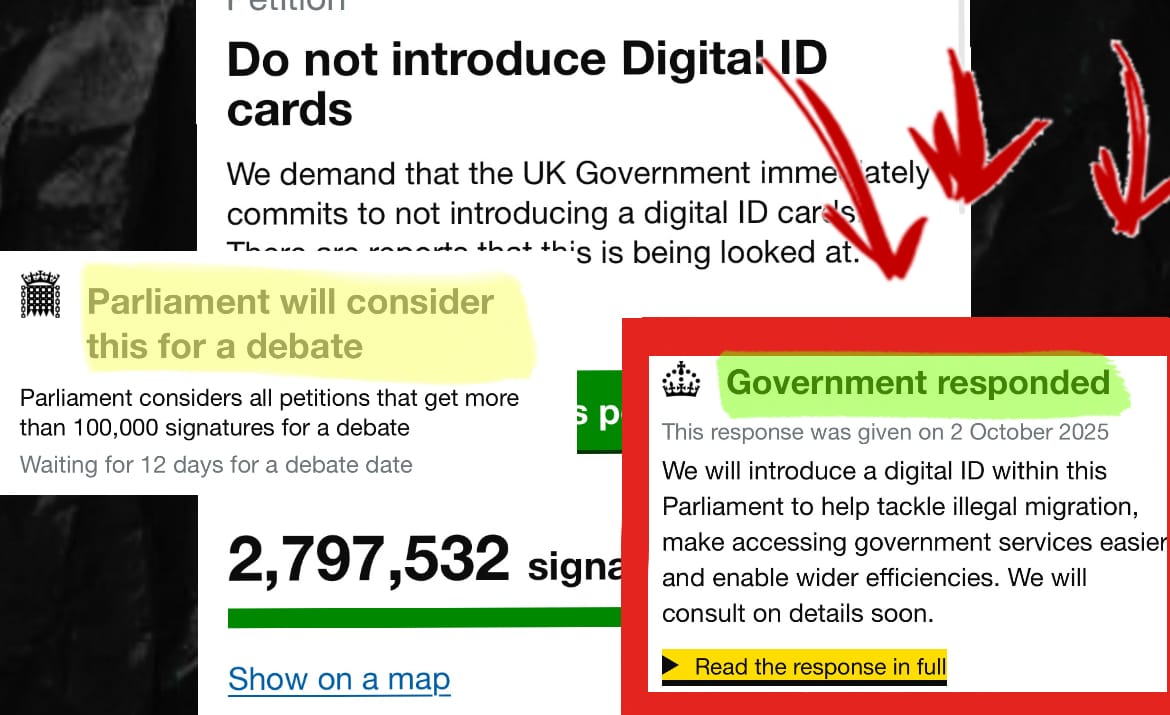
In response to Maxim Sutcliff’s petition urging Parliament not to introduce Digital ID, the government issued a statement on October 2nd—despite the matter never even reaching the floor for debate yet.
Their response?
“We will introduce a digital ID within this Parliament to help tackle illegal migration, make accessing government services easier, and enable wider efficiencies.”
They went on to say that people today must present an assortment of documents to prove who they are—whether applying for a job, using public services, or buying alcohol. This, they claim, creates bureaucracy, space for fraud, and opportunities for illegal work and modern slavery. They argue that too many are excluded—like the one in ten adults without photo ID—who supposedly struggle to access what they’re entitled to.
Their solution?
A national digital identity.
“Not a card,” they insist, but a centralised digital profile for every UK citizen and legal resident aged 16 and over—potentially as young as 13. It will be free, optional—at least in name—but mandatory for certain applications. Bit by bit, it will inevitably become the key to everything—from public services to private life.
Now stop and think!
They call it “optional”. But if refusing it means losing access to work, benefits, support—and even something as ordinary as buying a drink—what does optional really mean?
Does that sound like the freedom of choice?
Because when access to everyday life depends on compliance, it’s not convenience. It’s control!
For those who still believe freedom and choice are worth defending—for ourselves and for those who follow—the petition remains open. Every signature makes a difference!